Shaping Austria’s Competitive Future
Global economic and geopolitical dynamics are evolving rapidly. Shifts in industrial policy, growing regulatory complexity, new technologies, and intensifying global competition are reshaping the environment in which companies operate. At the same time, Austria’s prosperity continues to depend strongly on its openness to international trade, investment, and innovation.
Against this backdrop, AmCham Austria’s Policy Committee on Trade & Strategic Competitiveness is currently looking at how Austria and Europe can strengthen their long-term competitiveness while maintaining open markets and strong international partnerships.
A key focus of the committee’s discussions is how Austria can remain an attractive destination for international investment in an increasingly competitive global landscape. Companies are making strategic decisions about where to invest, innovate, and scale their operations. Factors such as regulatory predictability, access to talent, digital infrastructure, and the overall administrative burden all play an important role in these decisions. Ensuring that Austria continues to provide a stable and innovation-friendly environment will therefore be central to maintaining and expanding its position as a competitive business location.
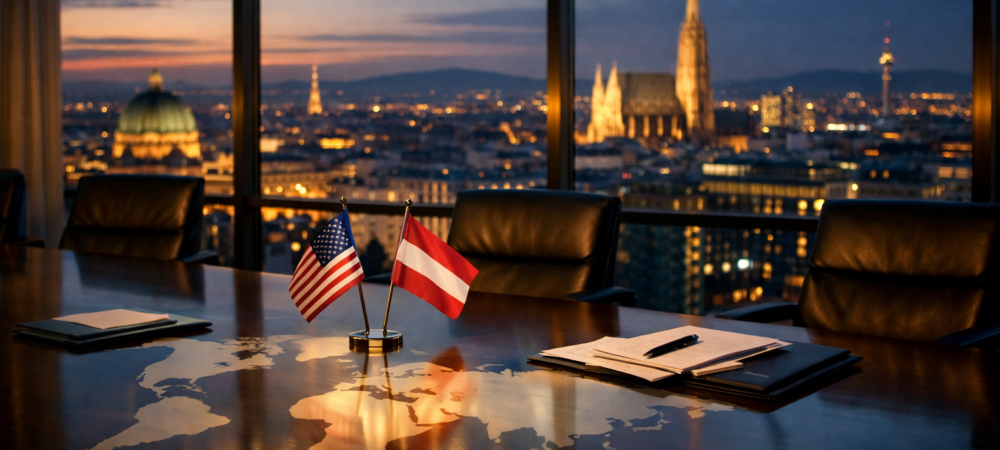
The committee is also exploring how Austria and the European Union can continue to benefit from open trade and investment frameworks, particularly within the transatlantic economic relationship. The EU and the United States remain the world’s most important economic partnership, with deeply integrated value chains, strong investment flows, and close cooperation across many industries. At a time of geopolitical uncertainty, strengthening this partnership — while avoiding unnecessary regulatory divergence — remains an important element of sustaining growth and innovation.
Another topic under discussion is the administrative and regulatory environment for companies operating in Austria and across the European Single Market. While regulatory frameworks often pursue legitimate policy goals, increasing complexity and reporting obligations can create challenges for companies, particularly for small and medium-sized enterprises. The committee is therefore looking at ways in which administrative processes and regulatory frameworks could evolve to better support innovation, cross-border activity, and investment.
At the same time, broader structural questions are becoming increasingly relevant. These include how digital transformation, emerging technologies, and the green transition can strengthen Europe’s competitiveness and how Austria can position itself as a location for future-oriented industries. Policies that support research and development, digital infrastructure, and access to skilled talent will play a key role in this discussion.
The Trade & Strategic Competitiveness Committee serves as a platform for exchange among AmCham members on these and related topics. The goal is to bring together perspectives from different sectors and international companies to better understand the challenges and opportunities shaping Austria’s economic environment.
Members who are interested in contributing to these discussions and helping shape the committee’s work are warmly invited to participate. Through collaboration and shared expertise, AmCham members can help identify priorities and contribute to the broader conversation on how Austria can strengthen its competitiveness and attractiveness as a place to invest, innovate, and grow.
(Photo credit: © banhalmi.at – (AmCham Austria Member))
